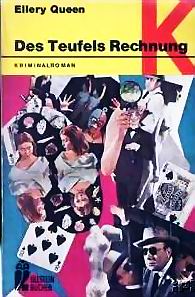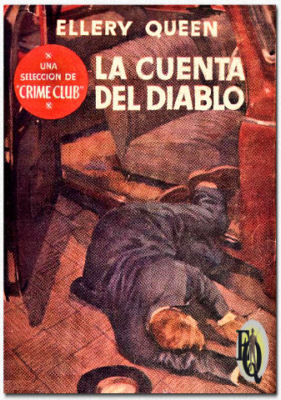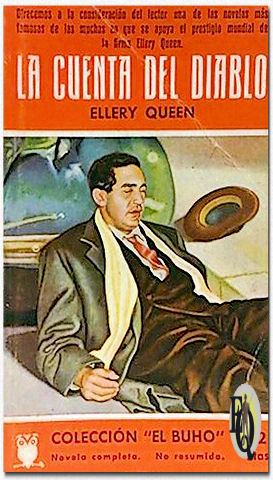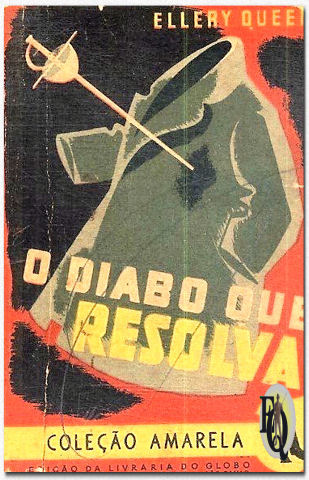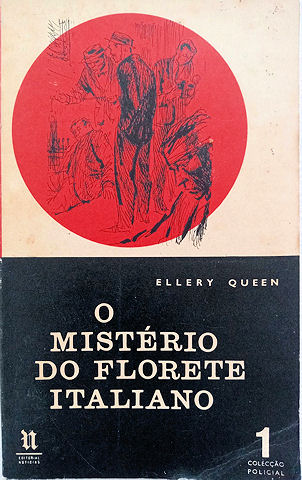
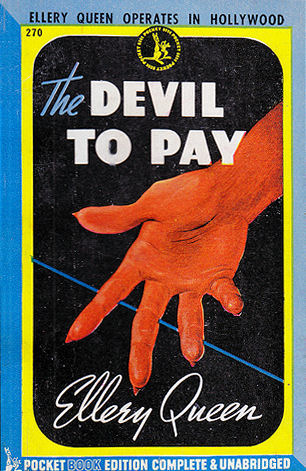


 he Devil to Pay
(1938) he Devil to Pay
(1938)
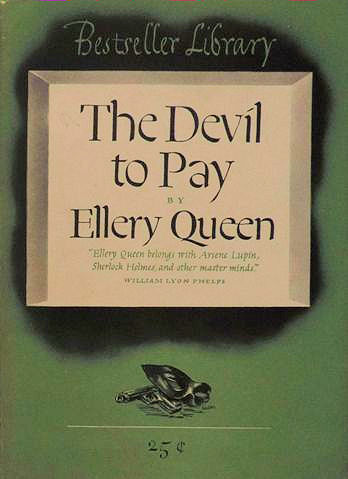
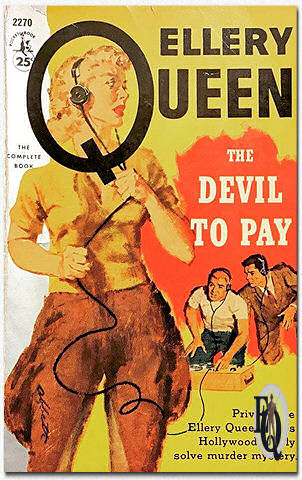
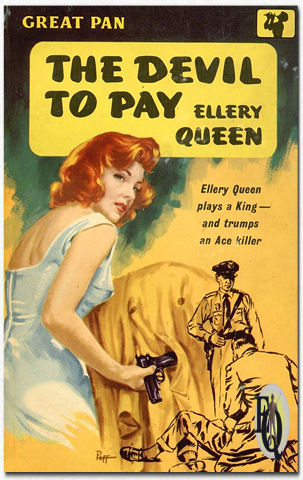
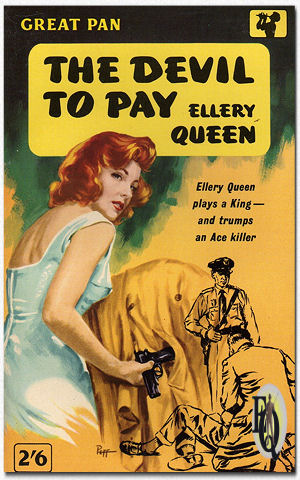
 Queen is King when it comes to air-tight mysteries that combine in his inimitable and cunning way those elements of ingenuity, surprise, and original setting that make possible deductive solutions that are always fair to the reader and strictly in accordance with the science of streamlined murder. This, the fourteenth Queen to be introduced to America's largest book-buying public, presents a blonde and exotic actress, Winni Moon, and her scented chimpanzee; a murder which became a managing editor's dream; Pink, an athlete from Flatbush, Brooklyn; Solly Spaeth, an unethical financier from New York. And Queen is literally King in The Devil to Pay, when he masquerades as Hilary "Scoop" King. |
|
| "Throughout its whole course "The Devil to Pay" is lively, straightforward and quick with interest; it is another and welcome Ellery Queen success." -- The New York Sun | |
    |
|
|
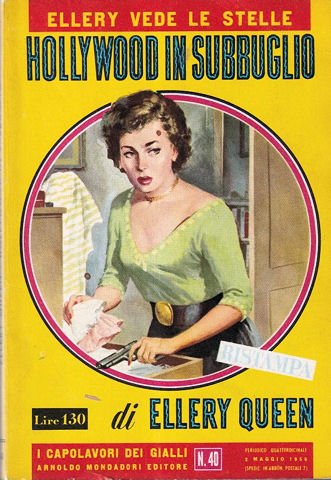
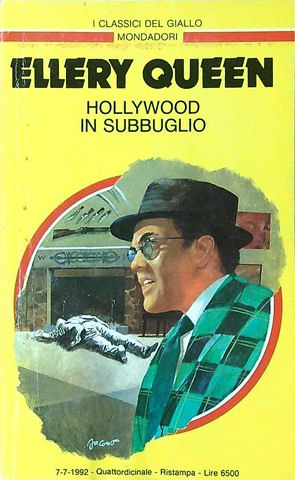
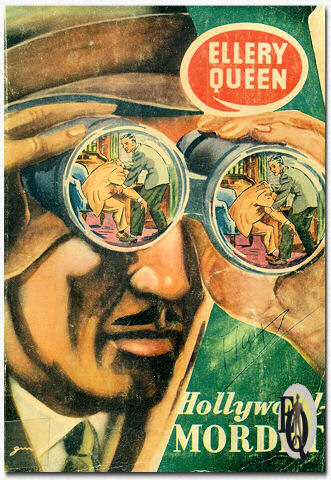
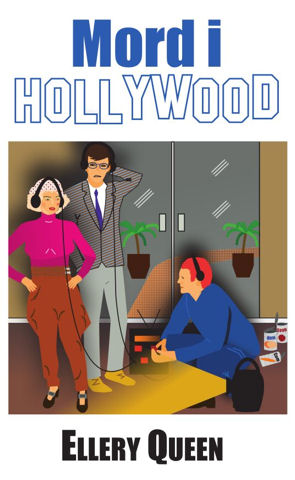
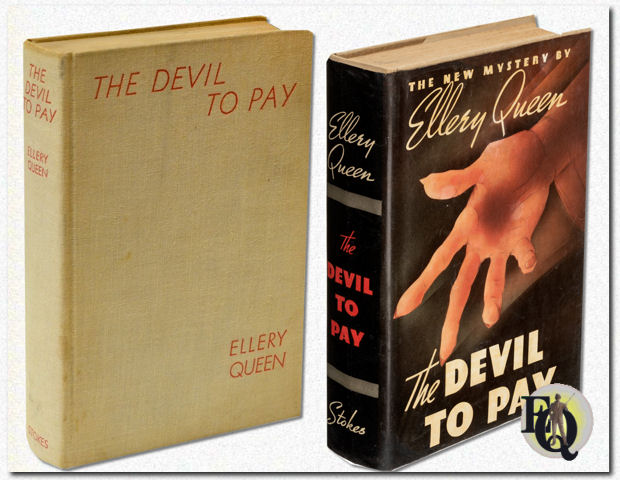
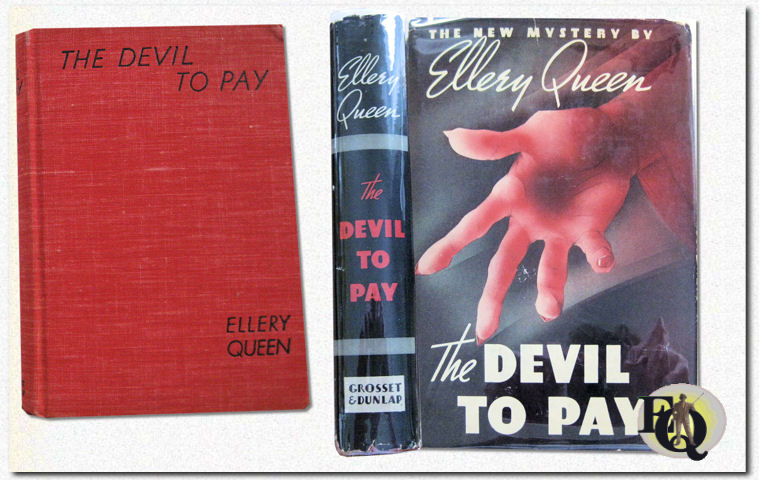
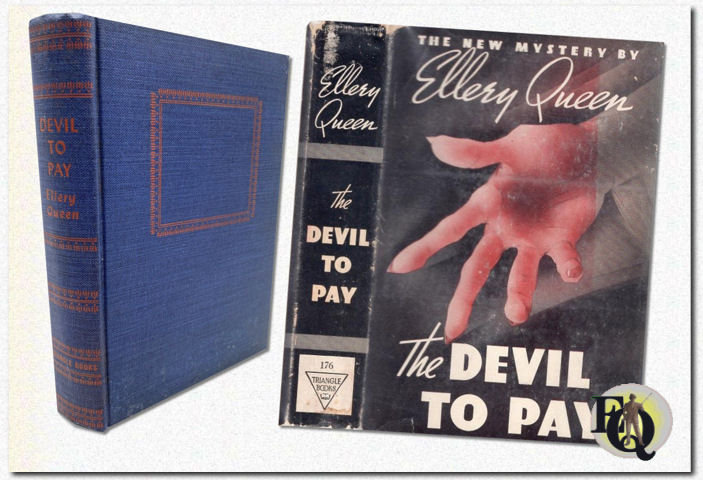
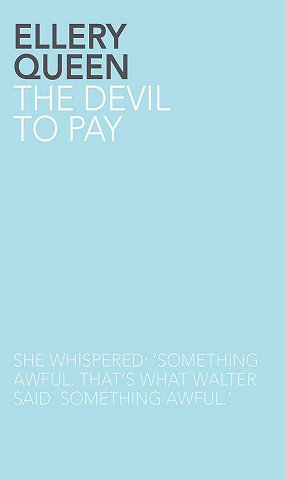
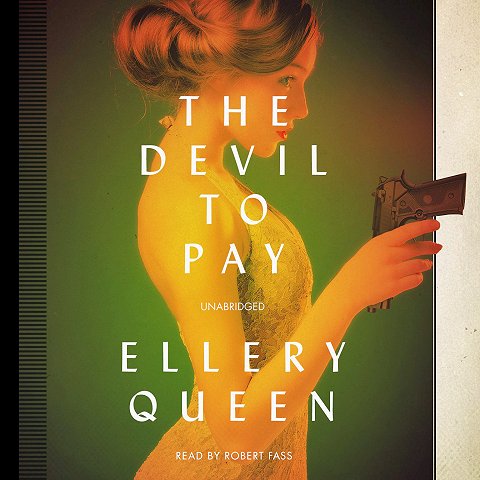
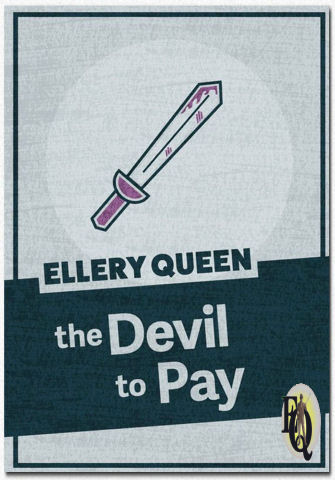
Above left to right: Both
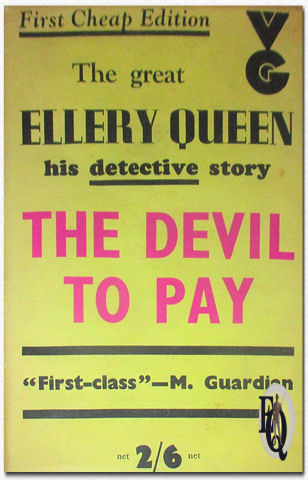
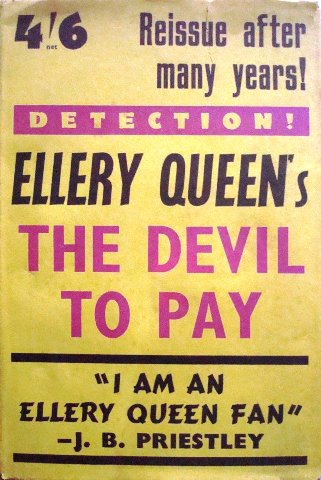
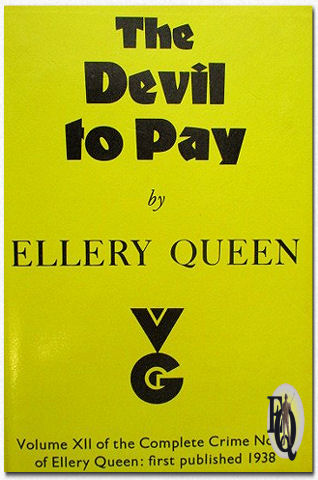
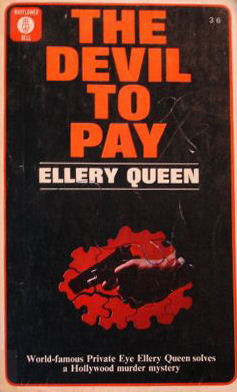
dust cover and hard cover for Stokes, Grosset & Dunlap editions Below left tor right: Dust and hard covers for Triangle books and Tower books (World Publishing co.). (Click on the covers to see the differences) * |
|
|
The Brooklyn Eagle, Feb 20.
1938 "Ellery in Hollywood" "The new mystery by Ellery Queen. What a thrill those few words give to mystery fans when they see them upon a book jacket. And there is Ellery at it again. This time he has moved out to Hollywood, not as a detective but as a writer of mystery plots for the movies and is employed by an invisible Mr. Butcher who has given him a large, beautiful but empty office and nothing to do in it. While he is waiting to see the man who is more inaccessible than royalty, a murder mystery breaks in Los Angeles; and like a hound after a fox, Ellery is soon sniffing after possible criminals. With their usual stupidity, the police have arrested the wrong man, although with very good reason for doing so; so Ellery with his unfailing hunches and ability to pick culprits dives into the fray an as a pseudo-newspaper reporter, does a good job of intelligent sleuthing. Of course, in the true Queen manner and to the complete surprise of every one (we hope, for we ourselves did not guess the culprit) gets his man and rescues the innocent. Although there is lots of local color, a glamorous but nauseating blonde Venus who leads around a pet chimpanzee on a pink ribbon, a dumb and opinionated inspector, a drunken newspaper man, a pretty and sporting heroine, still this is by no means one of the best of the Queen yarns. It lacks the icy gruesomeness of the earlier tales and seems to be solved with too great an attempt to find an unexpected murderer. Yet it is a snappy tale and miles above the general run of detective fiction. Queen's fans may be slightly disappointed by the normalcy of his latest crime thriller, but they will be glad to read it." Washington DC's The Evening Star, Feb 23 1938, "New Books at Random" by Margaret Germond "... The story is typically Hollywood in design. Not any of its characters, except Valerie, is a Californian. Solomon Spaeth was “spawned” in New York, became a millionaire without scruples as to by what means and made his business association with Jardin in Hollywood. Jardin is a Virginian, an aristocrat and a sportsman. Pink, major domo of the Jardin establishment, is a native of Flatbush, Brooklyn, Ruhig is an Austrian, Winni Moon began life in South Dakota and Walter Spaeth came into the world in a Chicago hospital. In keeping with the general atmosphere of California’s fantastic metropolis, Ellery Queen indulges in some choice comments on the studio outfits and other institutions in the melting pot of the Pacific Coast. It is a good story, nicely stacked with mystery and sprinkled with romance. And Mr. Queen is nonetheless fascinating because of his change of manner and appearance." |
|
|
The Devil to Pay (1938), marks the detective's first full-length adventure set against the glamorous backdrop of Hollywood. Combining the familiar Queen ingredients of intricate deduction, colorful characters, and surprising solutions with satire on the motion-picture industry, the novel presents a lighter, more fast-paced mystery than many of its predecessors. While critics generally agreed that it lacked the grim atmosphere and intellectual rigor of Queen's earlier classics, it remained an entertaining and highly readable detective story that demonstrated the authors' continuing willingness to experiment with setting and characterization. The story begins with Ellery Queen arriving in Hollywood to work as a mystery writer for the movies. Ironically, his new employer, the elusive studio executive Mr. Butcher, proves almost impossible to meet, leaving Ellery with an impressive but completely empty office and nothing to do. Before his screenwriting career can begin, however, a sensational murder captures the headlines. Wealthy financier Solomon ("Solly") Spaeth is found murdered under bizarre circumstances, and Ellery soon abandons Hollywood fiction for a very real investigation. Assuming the identity of newspaper reporter Hilary "Scoop" King, he infiltrates the journalistic world to investigate the crime from within, a disguise that allows him to move freely among reporters, police officers, and suspects. The investigation introduces a typically eclectic cast of characters. Among them are the glamorous but unpleasant blonde actress Winni Moon, who constantly parades her perfumed pet chimpanzee on a pink ribbon; Pink, the athletic major-domo from Flatbush, Brooklyn; the wealthy but unscrupulous financier Solly Spaeth; the aristocratic Virginian sportsman Jardin; Austrian-born Ruhig; Walter Spaeth from Chicago; and the spirited heroine Valerie. The cosmopolitan backgrounds of nearly every character emphasize Hollywood as America's great melting pot, a city populated largely by outsiders rather than native Californians (Margaret Germond). Ellery quickly concludes that the police have arrested the wrong suspect, despite their apparently convincing evidence. Employing his characteristic powers of observation and deduction, he gradually uncovers the hidden relationships and motives surrounding Spaeth's death. The murder itself is among the novel's more unusual constructions, involving a bizarre combination of sword, arrow, molasses, cyanide, and carefully staged evidence. As in many Queen novels, seemingly insignificant physical clues ultimately reveal the truth, although several reviewers questioned whether some of Ellery's deductions were sufficiently justified. His interpretation of evidence such as a pair of binoculars near the crime scene struck some critics as more intuitive than logically inevitable, and his willingness to eavesdrop using a Dictaphone raised ethical objections from reviewers. Unlike the darker, more claustrophobic
mysteries that preceded it, The Devil
to Pay places considerable emphasis on Hollywood atmosphere. Queen
peppers the novel with observations about movie studios, newspaper offices,
publicity, celebrity culture, and the artificial glamour of Southern
California. The romance between Ellery and Valerie, established in the
opening chapters, occupies more narrative space than was customary in the
earlier novels and was widely considered one of the book's strongest
features. Indeed, some commentators regarded the opening section, with its
introduction to Hollywood life and romantic subplot—as more successful than
the detective puzzle itself ( |
|
|
|
|
|
The novel also represents a subtle
departure in tone. It was Ellery Queen's first Hollywood
novel and one of the earliest to contain faint political overtones. Although
the mystery remains cleverly constructed, some critics believed it never
develops into one of the series' truly memorable detective problems. The
solution depends less upon the elaborate chain of airtight deductions found
in classics such as The Greek Coffin
Mystery and more upon unexpected revelations. Nevins observed that one
of the central clue ideas involving men's camel-hair coats would later
receive a more logical treatment in the short story "Mind Over Matter"
(1939), suggesting that the concept was stronger than
its execution in the novel itself ( Critical reception reflected these mixed impressions. The New York Sun praised the novel as "lively, straightforward and quick with interest," calling it another welcome Ellery Queen success. The Brooklyn Eagle admired the entertaining pace, colorful local flavor, and engaging cast, although it felt the novel lacked the chilling quality of earlier Queen mysteries and relied too heavily on producing an unexpected culprit. Margaret Germond, writing in The Evening Star, complimented the convincing Hollywood setting, the generous supply of mysteries, romance, and deception, while noting that Ellery himself remained an appealing protagonist despite his altered appearance and manner. British critic Torquemada considered the novel further evidence of Ellery Queen's remarkable growth as a stylist, arguing that the cousins had matured from writers of ingenious puzzles into accomplished novelists capable of telling sympathetic, well-written stories. Not all reviewers were equally enthusiastic. Dr. Watson Jr., in Sydney's Daily Telegraph, humorously observed that the novel's most memorable feature was Ellery's temporary beard, grown solely so he could later shave it off as part of a disguise. He argued that this odd detail made the famously cerebral detective seem almost human for the first time. Although he criticized what he regarded as implausible deductions and questionable investigative methods, he nevertheless admitted enjoying the novel and applauded Queen for selecting an unexpected type of murderer rarely used in detective fiction. The title itself refers to the English
idiom "the devil to pay," meaning serious trouble resulting from one's
actions or an unpleasant reckoning that must eventually come.
The phrase is said to refer to the devil, a seam which was
difficult to reach and which needed a lot of tar to caulk, or
pay. The latter word is a well-attested usage on board ship,
first recorded in the seventeenth century, but devil as a name
for a ship’s seam is less well-known, and there’s suspicious
disagreement among sources as to which seam is meant. Although The Devil to Pay is generally not ranked among Ellery Queen's greatest detective novels, it occupies an important place in the evolution of the series. It successfully broadens Ellery's world beyond New York, introduces Hollywood as an entertaining new setting, experiments with disguise and romance, and demonstrates the authors' willingness to balance classic puzzle plotting with adventure and satire. The result is a lively, accessible mystery whose colorful atmosphere and memorable characters often overshadow its less rigorous detective problem, making it an enjoyable if somewhat transitional entry in the Queen canon. |
|
| Movie: Ellery Queen and the Perfect Crime. | |
         |
|
|
Daily Telegraph, Sydney April 2. 1938
"Mystery of the Week: Ellery Queen grows a beard" by Dr.
Watson Junr. "NEWS lead for the latest Ellery Queen mystery is the hair-raising fact that the lanky detective grows a beard. True, he wears it only so that he will be able to shave it off later, thus disguising himself from people he met earlier. But the grotesque reality of an Ellery Queen beard moved me profoundly; the black bristle is my most enduring memory of "The Devil To Pay." For I have never got round to believing that Ellery Queen really exists. I have never been able to picture what he looked like. To me he has always been a beanpole in flannels, slick and pedantic, extraordinarily lucky and highly implausible. His beard somehow made him seem human. I feel now that, with patience and understanding, I can get to know him. Something Like A Stab! The mystery, otherwise, is a characteristic Ellery Queen -ingenious, entertaining, surprising, and unconvincing. I was enraged by Ellery Queen's airy and sweeping deductions (Gollancz p. 191) from the discovery of binoculars in a house near the spot where the rascally big business man is found stabbed to death with a mixture of sword, molasses, arrow, and cyanide. In effect, his bland logic means that, if a detective finds an apple tree growing near the scene of a murder, he knows" immediately that a bloke was up the tree watching the murder being committed. And I must reiterate, with an oath, that in no circumstances will I admit the ethics of eaves dropping in detection — whether at a keyhole, as Nelson Lee did it, or at a Dictaphone, as Ellery Queen does it. Nevertheless, I enjoyed "The Devil To Pay" (although the relevance of the title is a complete and utter mystery to me) . Apart from the strange miracle of the Ellery Queen beard, I salute with raised cognac balloon his discovery of a murderer who has appeared as a type in scores of other mysteries but has never been selected or suspected as a murderer." |
|
  |
|
|
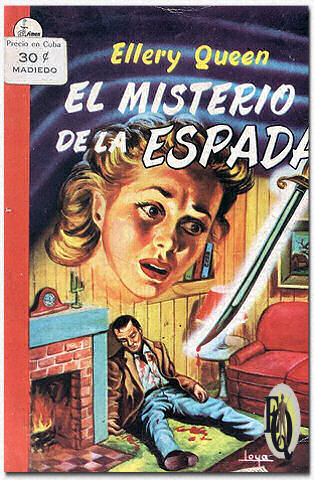
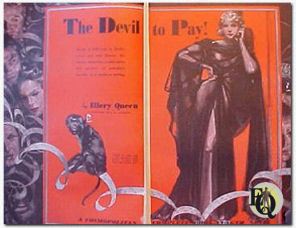
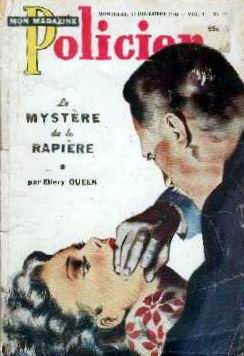
Above left: Pre-publication in
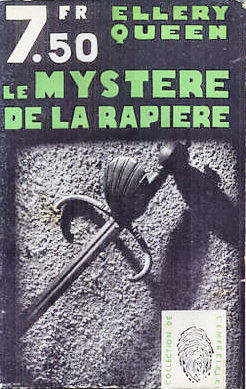
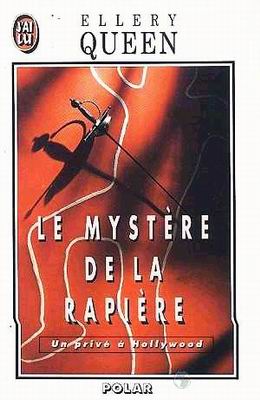
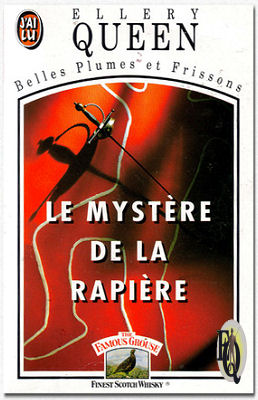
Cosmopolitan December 1937. Above right: French magazine Mon Magazine Policier (Revue Moderne) Vol.4 published in Montreal, Canada, December 15. 1944. It featured Le Mystère de la Rapière |
|
|
|
 Other articles on this book (1) Reading Ellery Queen - The Devil to Pay Jon Mathewson (Dec 2014) (2) My Reader's Block Bev Hankins (May 6. 2012) |
|
|
*
Interested readers should know
that the icons/covers
of books, used throughout the
website have extra
descriptions/information not
included in the text on the same
page. Pointing your cursor at
the icon/cover used to reveal
this extra information. To achieve the same effect Firefox users can install an add-on called 'Popup ALT Attribute'. When installed pointing your cursor at an icon/cover results in showing you the details or additional information. |
 Copyright © MCMXCIX-MMXXVI Ellery Queen, a website on deduction. All rights reserved. |